

Inside the Showground: What Really Happens on Show Day?
There's much more happening behind the scenes than rides and entertainment. Discover the people, competitions, animals, exhibits and preparations that bring the Show Day experience to life.
For most visitors, Show Day begins at the gate. The rides are already spinning, food stands are firing up, animals are settled into their pavilions and show rings are ready for competition.
But long before the first families arrive, the showground has been buzzing with activity.
Across Australia, agricultural shows bring together farmers, exhibitors, competitors, volunteers, performers, judges, food vendors and showground crews. Behind the colour and excitement is an enormous operation — and much of what makes a Show Day special happens beyond Sideshow Alley.
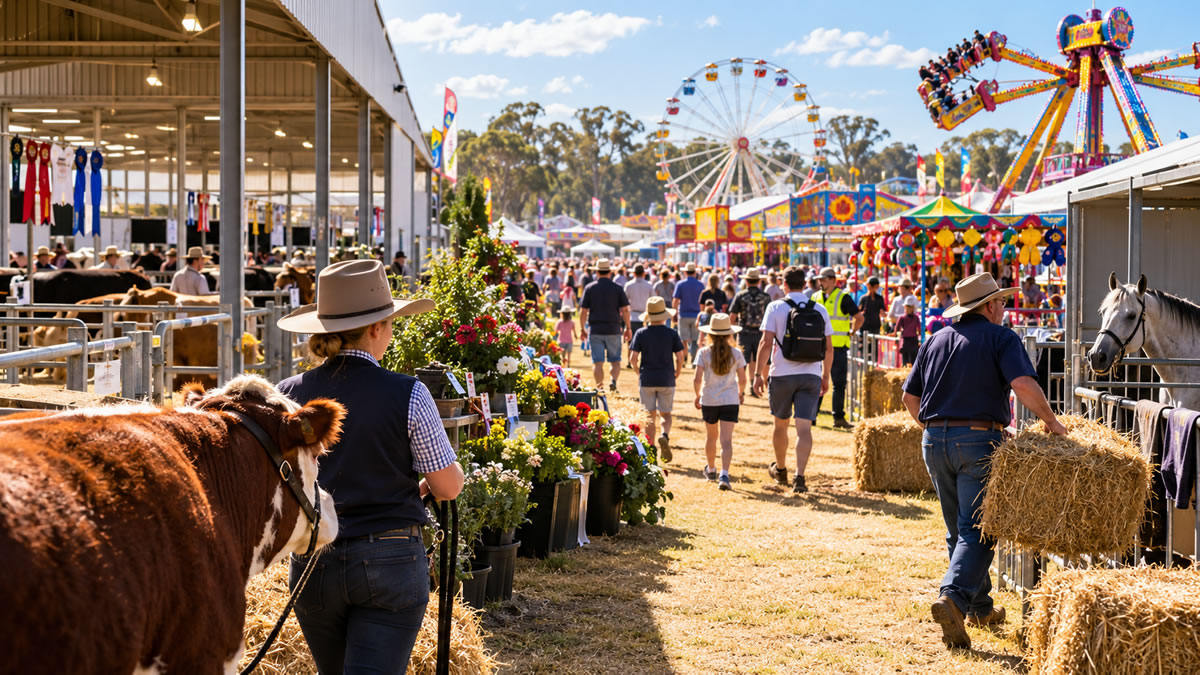
Before the Gates Open
A showground can begin transforming days, and sometimes weeks, before Show Day.
Temporary stalls and displays are installed, competition areas prepared, livestock facilities readied and carnival rides assembled. Food vendors bring in equipment and supplies, exhibitors set up displays and competitors begin arriving with everything from cattle and horses to cakes, flowers and prize vegetables.
By the morning of the show, crews may have already been working for hours.
Animals need feeding and grooming. Arenas and judging areas need checking. Exhibits receive their finishing touches. Food stalls begin preparing for the rush ahead, while organisers make sure the countless moving parts of the showground are ready for opening time.
Then the gates open — and an entire temporary community comes to life.
The Animals Are More Than an Attraction
Cattle, sheep, horses, goats, poultry and other animals are among the great traditions of Australian agricultural shows.
For visitors, the livestock pavilions offer a chance to see animals they might rarely encounter in everyday life. For exhibitors, however, Show Day can represent months or even years of breeding, raising, training and preparation.
Animals are carefully presented before entering the judging ring, where they may be assessed against standards for their breed or competition class.
Around the showground, visitors can also encounter equestrian events, animal demonstrations and educational displays highlighting the skills and knowledge involved in Australian agriculture.
It is one of the clearest reminders that beneath the carnival atmosphere, the agricultural show remains deeply connected to the country.
Competition Is Everywhere
Not every Show Day champion has four legs.
Step inside the exhibition halls and you'll discover another side of the show: rows of carefully judged cakes, preserves, flowers, vegetables, photography, handicrafts, artwork and other creations.
For many entrants, winning a ribbon at their local or Royal Show is a genuine achievement.
These competitions celebrate skills that have been part of Australian show culture for generations, while newer categories allow contemporary crafts, creative pursuits and emerging interests to become part of the tradition.
The result is an extraordinary collection of things grown, baked, made, raised and created by people from the surrounding community.
Look closely and almost every pavilion has its own competition underway.
The People Behind the Show
One of the easiest things to overlook on Show Day is just how many people it takes to make everything happen.
There are judges examining exhibits, stewards coordinating competitions, animal handlers preparing livestock, ride operators checking attractions, performers getting ready backstage and vendors serving seemingly endless queues.
Then there are the volunteers.
Agricultural societies around Australia rely heavily on people who give their time to organise competitions, prepare grounds, coordinate exhibitors, answer questions and perform many of the less visible jobs required to stage a successful show.
For some families, that involvement stretches across generations.
Show Day might last only a day or several days, but the work behind it can continue throughout the year.
Sideshow Alley Has Its Own Rhythm
Of course, no trip behind the scenes would be complete without Sideshow Alley.
Before the lights, music and screams of riders take over, attractions must be transported to the showground, assembled and prepared for operation.
Game stalls are stocked with prizes, show bag stands are filled, generators and equipment are checked and rides are readied for another long day.
Once the crowds arrive, Sideshow Alley becomes one of the busiest parts of the showground. Ride operators, game attendants and stallholders work through a constantly changing flow of families, teenagers and thrill seekers.
When the show closes, much of it will eventually be dismantled, packed away and transported to another event.
What feels permanent for a few exciting days is actually a travelling world.
Feeding a Showground
Then there is the food.
Dagwood dogs, hot chips, burgers, fairy floss, freshly made doughnuts and strawberry sundaes don't simply appear when hunger strikes.
Behind every food stall is another carefully planned operation involving deliveries, refrigeration, cooking equipment, preparation areas and staff working to keep up with demand.
Some vendors travel from show to show, while others are local businesses, community organisations or specialist operators.
And although Show Day food continues to evolve, those familiar favourites remain an important part of the experience. For many visitors, eating the same treat they enjoyed as a child is every bit as traditional as visiting the animals or buying a show bag.
Keeping the Show Moving
While visitors move between attractions, another network of people is working to keep the showground operating.
Cleaning crews tackle the constant stream of rubbish. Security and event staff manage crowds and access points. First aid teams stand ready. Maintenance crews respond when something needs attention, while organisers monitor events and schedules across the grounds.
At larger shows, thousands of visitors can be moving through the site at the same time.
Keeping that experience running smoothly requires coordination that most visitors will never notice — which, in many ways, is exactly the point.
When the Crowds Go Home
Eventually, the rides stop, pavilion doors close and the last visitors make their way towards the exits.
For many people working at the show, however, the day isn't finished.
Animals still need attention. Food stalls and exhibits need securing. Competition areas are tidied, equipment checked and preparations made for the following day — or for the enormous job of packing everything away.
Gradually, the showground begins returning to normal.
Rides disappear. Temporary stalls come down. Exhibitors head home. Livestock trailers roll through the gates.
Until next time.
More Than a Day at the Show
It is easy to think of Show Day as a collection of rides, show bags, animals and favourite foods. Behind those experiences, however, is something much bigger.
Agricultural shows bring together country and city, tradition and entertainment, competition and community. They give producers and exhibitors a place to showcase what they do, competitors an opportunity to test their skills and families a chance to experience traditions that have been shared across generations.
So next time you're walking through the showground, look beyond the main attractions.
Behind almost every pavilion, competition, animal, ride and food stall is someone who has spent hours, days or months preparing for that moment.
That's what really happens on Show Day.